
Find relief from chronic knee pain with an innovative, minimally invasive treatment designed to reduce inflammation and help you get back to the activities you enjoy.
Knee osteoarthritis can cause chronic pain and inflammation that makes walking, exercising, and everyday activities more difficult. Inflammation within the lining of the knee joint can lead to increased blood flow, contributing to ongoing pain and discomfort.
For patients who haven't found enough relief with medications, physical therapy, or injections, Genicular Artery Embolization (GAE) offers a minimally invasive option that may help relieve pain without replacing or removing any part of the knee.
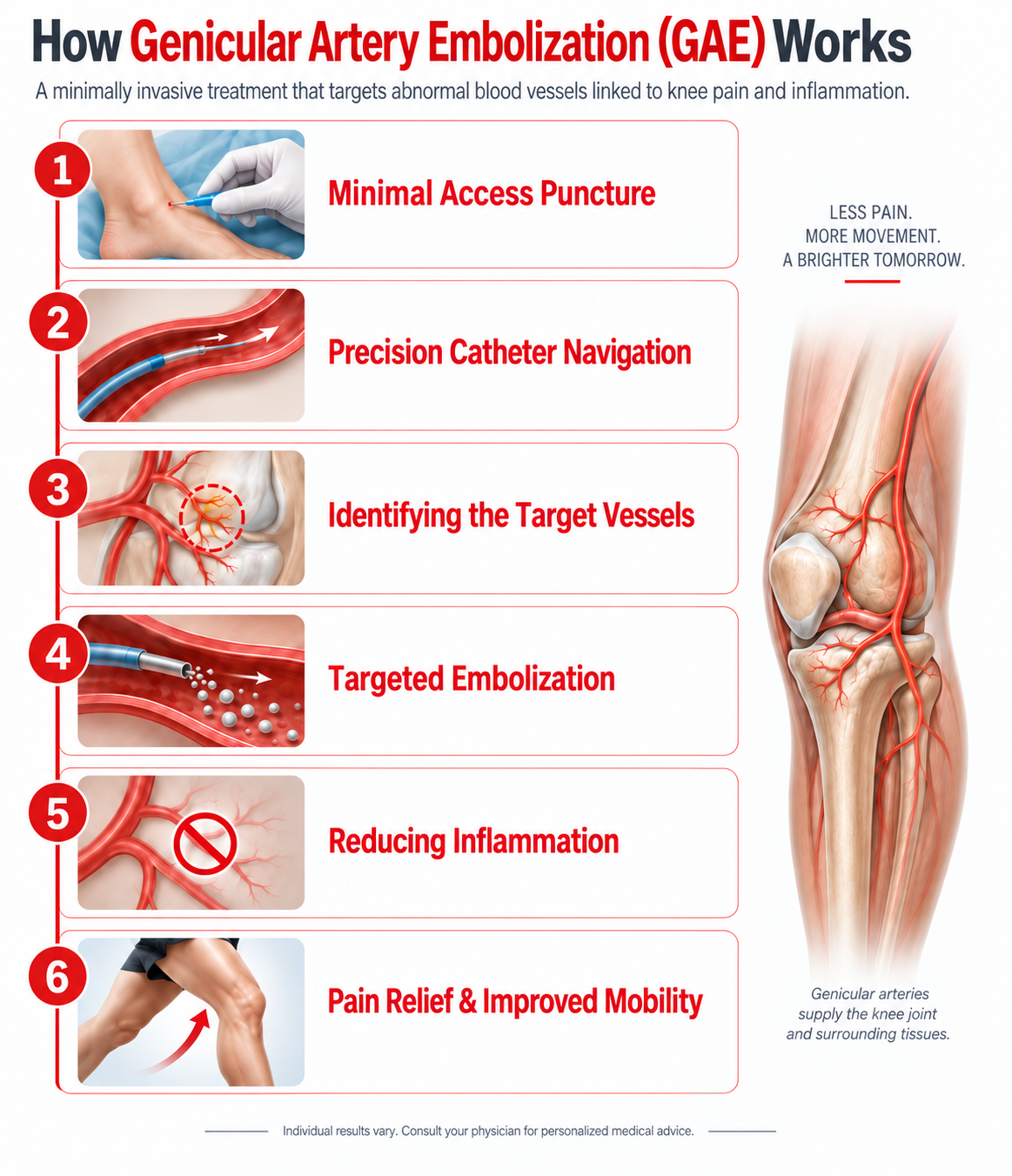
Genicular Artery Embolization targets abnormal blood flow associated with inflammation in the knee, offering a minimally invasive approach to chronic osteoarthritis pain.
Genicular Artery Embolization is a minimally invasive procedure designed to reduce knee pain caused by osteoarthritis. During treatment, a small catheter is inserted through a tiny puncture in the upper thigh or groin.
Using real-time imaging, the vascular surgeon guides the catheter to the genicular arteries that supply blood to the knee. Tiny particles or coils are then used to block abnormal blood vessels, reducing blood flow associated with inflammation and pain. The benefits of this procedure include:
Genicular Artery Embolization (GAE) is a minimally invasive procedure used to treat chronic knee pain associated with osteoarthritis. It reduces abnormal blood flow to areas of inflammation within the knee without removing or replacing any part of the joint.
GAE may be an option for patients with moderate to severe knee osteoarthritis who haven't found adequate relief with conservative treatments and aren't ready or eligible for knee replacement surgery. A vascular specialist can determine whether the procedure is appropriate for you.
GAE is performed without a large incision or general anesthesia. According to Middle Tennessee Vascular's current guidance, patients go home within a few hours and can typically return to normal activities within a few days. Many patients report improvement in knee pain and function within one to two weeks, although individual results and recovery can vary.
Our team is here to help. Contact us today and we’ll be happy to answer your questions.
Contact Us→