
Expert evaluation and advanced treatment for abdominal aortic aneurysms, with minimally invasive options designed to protect your vascular health.
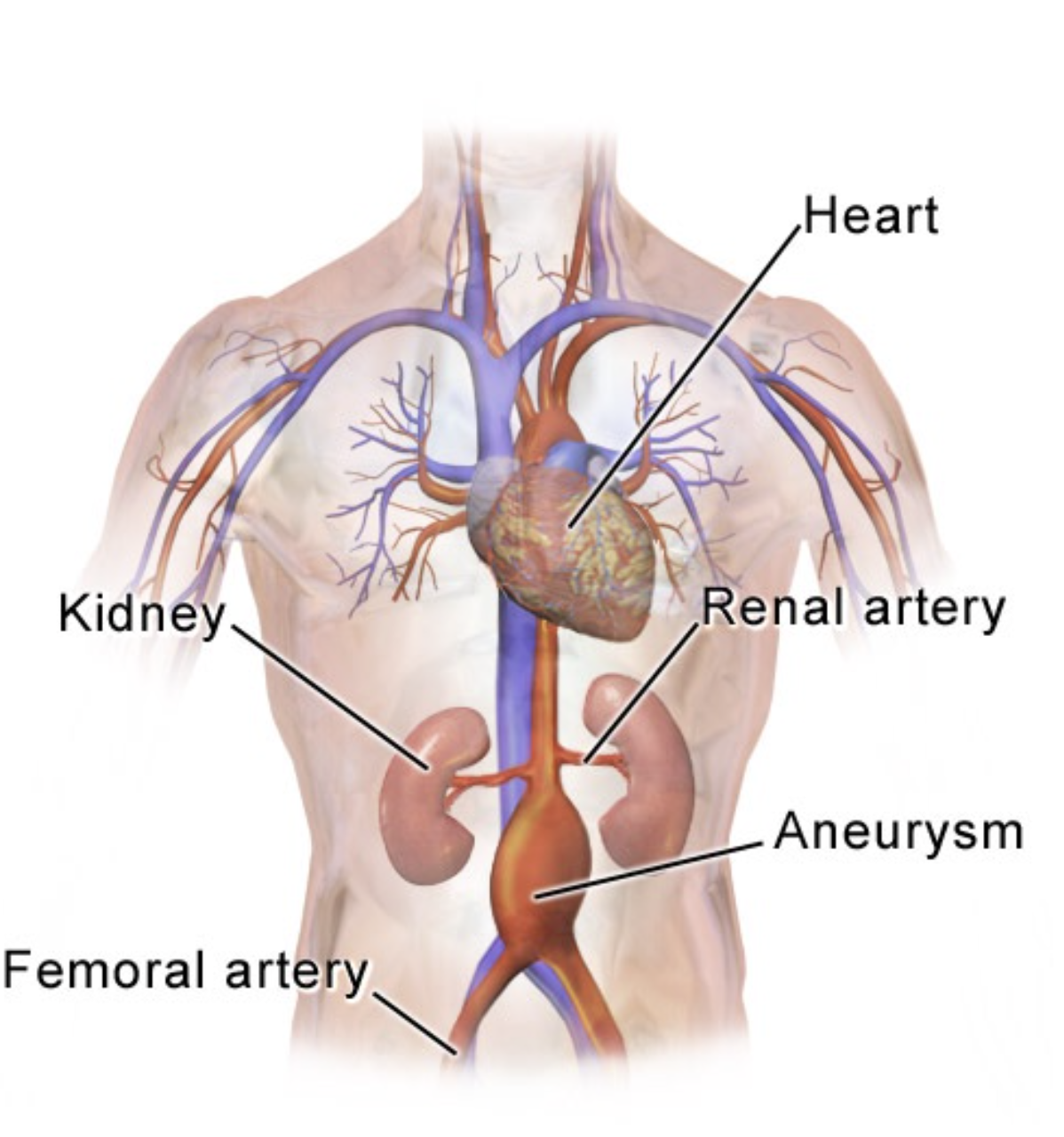
The aorta is the largest artery in the body and carries blood from the heart to the rest of the body. An abdominal aortic aneurysm (AAA) occurs when a weakened area of the aorta within the abdomen expands or bulges.
An AAA can become dangerous if it continues to enlarge and ruptures. For this reason, aneurysms may need to be closely monitored or treated depending on their size, growth, and other individual factors. Learn more about abdominal aortic aneurysms here.
Treatment depends on the size and severity of the aneurysm and your individual health needs. When repair is necessary, many patients may be candidates for a minimally invasive approach.
Not every abdominal aortic aneurysm requires immediate surgery. Smaller aneurysms may be closely monitored, while larger aneurysms are more likely to require repair. Your vascular specialist can evaluate the aneurysm and determine the appropriate next steps based on your individual condition. The current MTV page specifically notes the importance of closely monitoring an AAA when it is not immediately addressed.
Many patients are candidates for minimally invasive aneurysm repair using stent grafts. Through small incisions in the groin, the surgeon places a stent graft within the affected portion of the aorta to repair the aneurysm.
Compared with the large abdominal incision traditionally used for aneurysm repair, Middle Tennessee Vascular says this approach can result in less blood loss, less pain, and a quicker recovery. Their current page says patients are typically observed overnight and may return home the following day.
An abdominal aortic aneurysm, or AAA, occurs when an area of the abdominal aorta becomes weakened and expands or bulges. Because an aneurysm can become life-threatening if it ruptures, appropriate monitoring and treatment are important.
Several factors can increase the likelihood of developing an AAA. Middle Tennessee Vascular specifically identifies smoking, high blood pressure, age, and sex as risk factors associated with the condition.
Treatment depends on the aneurysm and the patient's individual circumstances. Larger aneurysms may require surgery. Many Middle Tennessee Vascular patients are candidates for minimally invasive repair using a stent graft placed through small groin incisions.
Our team is here to help. Contact us today and we’ll be happy to answer your questions.
Contact Us→